
Ankle Sprain Care You Can Count On
Expert diagnosis and treatment for ankle sprains, helping you recover comfortably and reduce the risk of re-injury.

What You Need To Know
Understanding ankle sprains, how they happen, and when to seek care.
Understanding Ankle Sprains
An ankle sprain refers to tearing of the ligaments of the ankle. The most common ankle sprain occurs on the lateral or outside part of the ankle. This is an extremely common injury which affects many people during a wide variety of activities. It can happen in the setting of an ankle fracture, meaning when the bones of the ankle also break, but most commonly it occurs in isolation.
Sprained ankles may occur when a person accidentally rolls, twists, or turns their ankle in an awkward way. A sudden sideways motion, a twist, or a misstep can cause the foot to land off balance, allowing the ankle joint to move too far. If ligaments connecting the foot and anklebones overstretch or tear, a sprain is the result.
Common symptoms include swelling, bruising, tenderness, and pain in the affected area. Some patients also experience a restricted range of motion or feel instability in the ankle. Depending on the severity of the sprain, a person may or may not be able to put weight on the foot. Bruising, technically referred to as ecchymosis, can extend from the ankle into the foot.
If the pain and swelling have not subsided in a day or so, or if you have difficulty walking, please come see a podiatrist for assessment of your injury. We will carefully examine your ankle and feet and may order imaging tests like an X-ray, ultrasound, or MRI to confirm the diagnosis and guide your treatment.
Treatment, Recovery, and Prevention
RICE is the best way to begin treatment at home. Rest your ankle or foot until you can see a doctor. Ice the area as soon as possible to reduce inflammation and reapply every three or four hours for about 20 minutes at a time, protecting your skin with a bandage or thin towel between the ice and your body. Apply compression by wrapping an elastic bandage around the affected ankle, and elevate the leg on pillows, above your heart if possible.
To help reduce pain and swelling, your doctor may suggest an oral anti-inflammatory medication such as aspirin or ibuprofen in addition to RICE. Depending on your injury, treatment may range from pain control to immobilization of the joint. If damage or pain is severe, your doctor may tape, splint, or cast the sprain so the torn tissues can rest and heal in the proper position. You may need crutches temporarily if your foot cannot support weight.
Some people are predisposed to ankle sprains. In people with a hindfoot varus, meaning the posture of the heels is slightly turned inward, these injuries are more common. Those who have had a severe sprain in the past, or who have weak peroneal muscles along the outside of the ankle, are also more likely to turn the ankle again.
To help prevent future sprains, warm up before physical activity, use caution on uneven surfaces, and consider tape or a brace on a previously injured ankle. Wear proper athletic shoes and replace them when worn out. With proper care and follow-up, sprains can heal correctly and reduce your risk of re-injury.
Find Ankle Sprain Care Near You
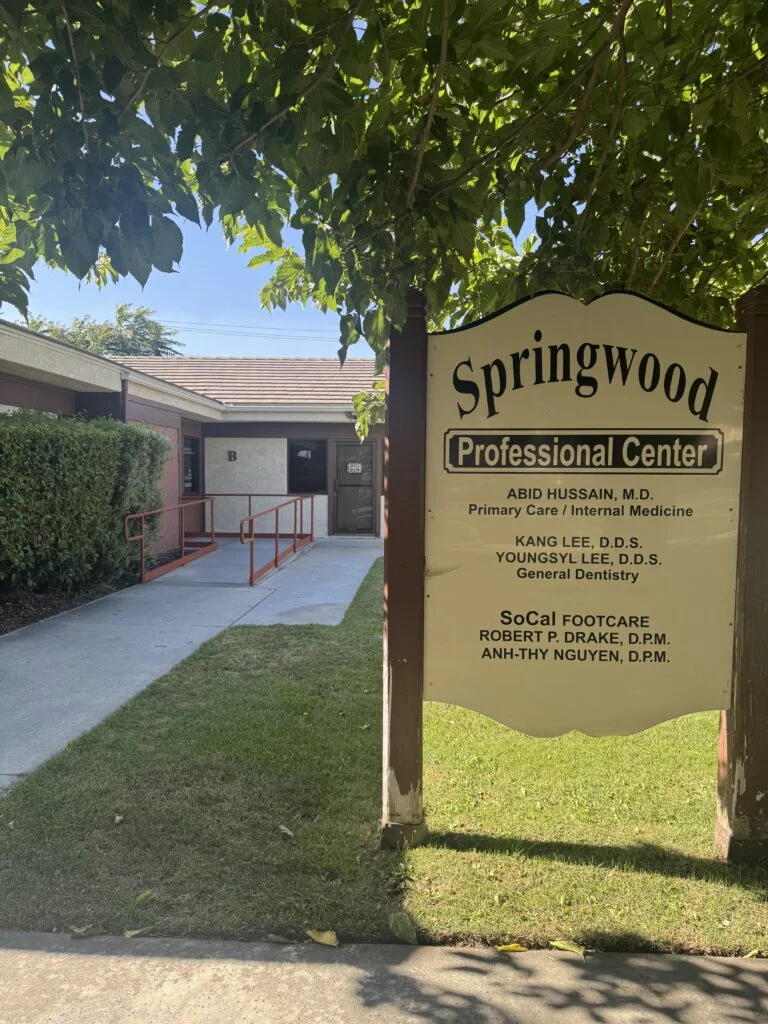
Visit a SoCal Foot Care location for convenient evaluation and treatment of your ankle injury.









Don’t wait on an ankle injury, let’s get you back on your feet.
We’re here to help you heal properly and prevent future sprains.