Bunion Surgery for Lasting Correction
Advanced surgical options that address the root cause of your bunion, straighten the toe, and reduce recurrence.
What You Need To Know
Understanding bunions, why they form, and when surgery becomes the right option.
Understanding Bunions and Surgical Care
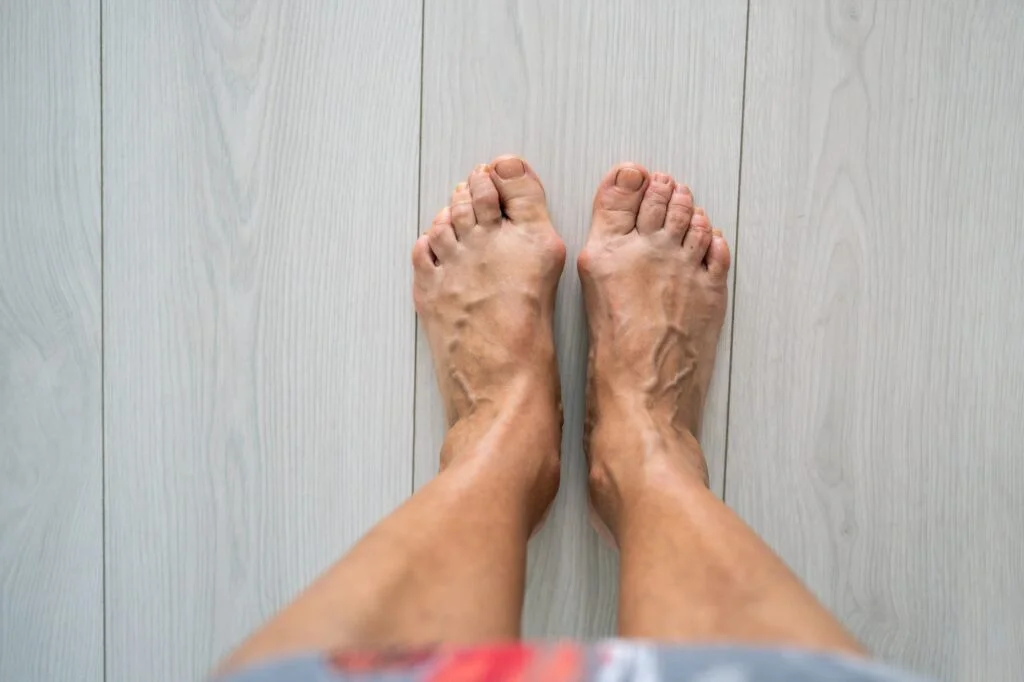
A bunion (also known as hallux valgus) is often described as a bump on the side of the big toe, but it is not as simple as that. The visible bump actually reflects changes in the bony framework of the foot. The big toe leans toward the second toe rather than pointing straight ahead, and the first metatarsal bone that connects to it deviates in the opposite direction. What we see is the side of the head and neck of the first metatarsal protruding inward while the big toe angles toward the little toes.
The cause of a bunion is biomechanical. In many cases, instability of a joint along the arch of the foot results in slow drifting of one of the bones comprising the big toe joint. Foot structure is determined by genetics, meaning many people with bunion pain inherited a predisposition. Shoes do not cause bunions, though certain shoes can accentuate or irritate one.
Symptoms may include a bump at the base of the big toe, pain, swelling or redness, callus under the ball of the foot, developing hammertoes, irritated skin where the first and second toes overlap, and restricted big toe motion. Symptoms often occur with tight shoes or long periods of standing.
Bunions are readily apparent on exam, but X-rays help determine the degree of deformity. Because bunions are progressive, they do not go away and usually worsen over time. If your bunion is painful or limiting your activities, schedule an evaluation so we can build a treatment plan suited to your needs.
Surgical Options and Recovery
Having a bunion does not by itself require surgery. Bunion surgery is elective, meaning it is your choice whether surgery is the right solution. In general, a bunion should be bothersome on a regular basis, limiting your activities or shoe wear, to be worth the recovery involved. When nonsurgical treatments fail and the bunion interferes with daily activities, it is time to discuss surgical options.
Bunion surgery has evolved significantly. Older techniques simply shaved the bump, which offered short-term relief but did not address the underlying instability. Osteotomy procedures then shifted to cutting and repositioning the bone in one or two dimensions, securing it with screws, pins, or plates. Today, 3D bunion correction repositions the bone to restore more normal anatomical alignment and secures the unstable joint to minimize recurrence.
At SoCal Foot Care, our board-certified podiatric surgeons offer several options. Lapiplasty 3D Bunion Correction rotates the deviated bone back into position and secures it with titanium plates. Scarfplasty provides multi-plane correction with immediate weight bearing and can be performed on both feet at once. OSSIOfiber offers an all-natural, metal-free implant that integrates into your own bone over 18 to 24 months. MiniBunion3D uses a small incision on the inner side of the foot for minimally invasive correction.
Recovery varies by procedure and patient, with many walking in a surgical shoe within days and returning to higher-impact activities around three to four months. Our staff will help you understand your insurance coverage before scheduling.
Find Bunion Surgery Care Near You
Find a SoCal Foot Care location offering advanced bunion surgery close to home.







Ready to stop letting bunion pain limit your shoes and activities?
We’ll walk you through your options and help you decide what’s right.