
Plantar Wart Treatment That Works
Painful growths on the bottom of your feet? We treat plantar warts at the root cause, not just the surface.
What You Need To Know
Understanding plantar warts, what causes them, and when it’s time to see a podiatrist.
Understanding Plantar Warts
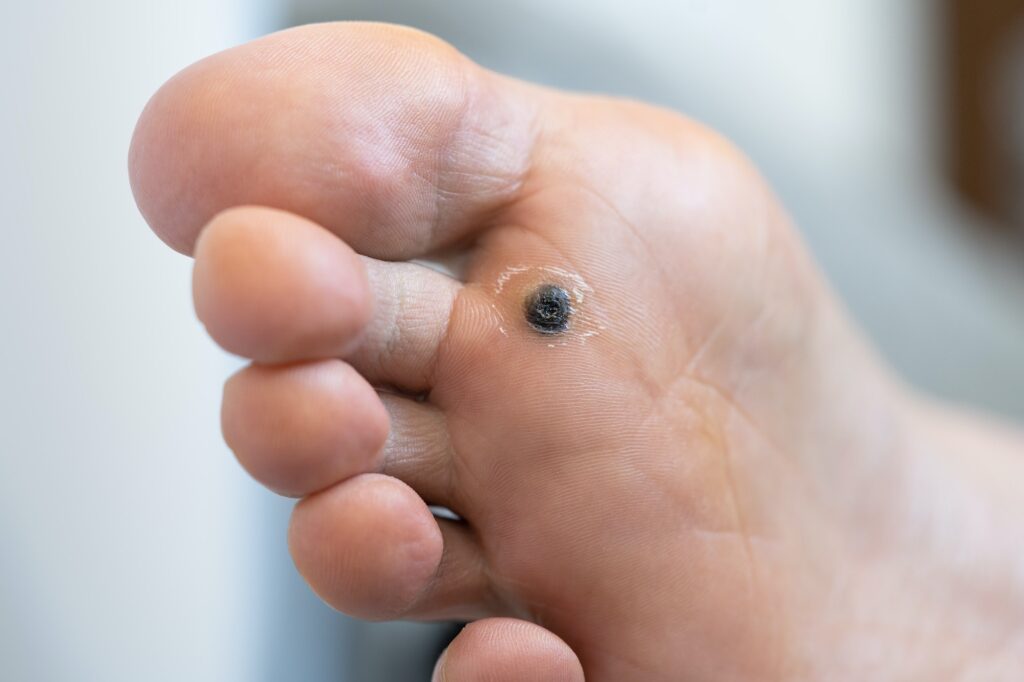
A wart is a small growth on the skin that develops when the skin is infected by a virus. Warts can develop anywhere on the foot, but they typically appear on the bottom (plantar side) of the foot. Unlike other types of warts, plantar warts are typically quite painful because the pressure from walking and standing forces them to grow into your skin. Sometimes plantar warts grow in a cluster, which is referred to as mosaic warts.
Plantar warts are caused by direct contact with the human papillomavirus (HPV). The virus can invade your skin through small cuts or breaks, and over time the wart develops into a hard, rough growth on the surface of the skin. Underneath the skin, the wart can have finger-like roots that reach down and grow, making them very difficult to treat from the surface. Warts are contagious and typically spread in public swimming pools, communal showers, gyms, and yoga studios.
Symptoms may include thickened skin that resembles a callus, pain when walking or standing, and tiny black dots on the surface of the wart. Some patients describe the feeling of painful pebbles in their shoes. Children, teens, and people with weakened immune systems are more vulnerable to the wart virus.
Because plantar warts are easily confused with corns or calluses, it’s important to see a podiatrist for proper diagnosis. If you’re experiencing pain that limits your activities, if the lesion is bleeding or changing, or if home treatments haven’t worked, schedule an appointment so we can develop an effective treatment plan.
Swift Treatment and Prevention
Swift is an FDA Cleared technology that has proven to be highly effective in the removal of plantar warts. It delivers low dose microwave energy through a specialized probe that targets the underlying HPV virus by stimulating a natural immune response in the body. We like to say that we’re addressing the root cause, not the symptom.
The Swift protocol involves between 3 and 4 treatments, spaced 4 weeks apart, aligning with the body’s natural immune cycle. Each treatment lasts only 5 to 10 minutes and is what we call a “sock off, sock on” treatment: limited debridement, no breaking of the skin, no bandages. Patients can resume daily activities immediately after treatment. The sensation feels similar to a small scratch or injection, lasting only a few seconds before subsiding.
Other treatment options include topical acidic medications, blister-forming medication, curettage (removing the wart with a small spoon-shaped instrument), and laser therapy. Warts are stubborn and may return, so following your podiatrist’s instructions is important for lasting results.
Prevention matters too. Always cover feet with shower shoes or flip-flops in public areas, keep your feet clean and dry, change socks and shoes daily, and avoid picking at existing warts. Ask your podiatrist before trying over-the-counter medications, as some can damage skin and may be dangerous if you have diabetes or poor circulation. With the right plan, most patients get back to comfortable, everyday activity.
Plantar Wart Treatment Near You
Find a SoCal Foot Care location offering plantar wart care close to home or work.








Don’t let a painful plantar wart slow you down any longer.
We’ll help you find the right treatment and get you back on your feet.